
Archive for February, 2012
What is Mechanical Insulation?
Do you think insulation only belongs in walls? Time to learn more. New e-learning modules are now available at www.nterlearning.org, as part of the Department of Energy’s Mechanical Insulation Education and Awareness Campaign (MIC). MIC is a program offered by the Department of Energy in conjunction with the National Insulation Association and the International Association of Heat and Frost Insulators and Allied Workers.
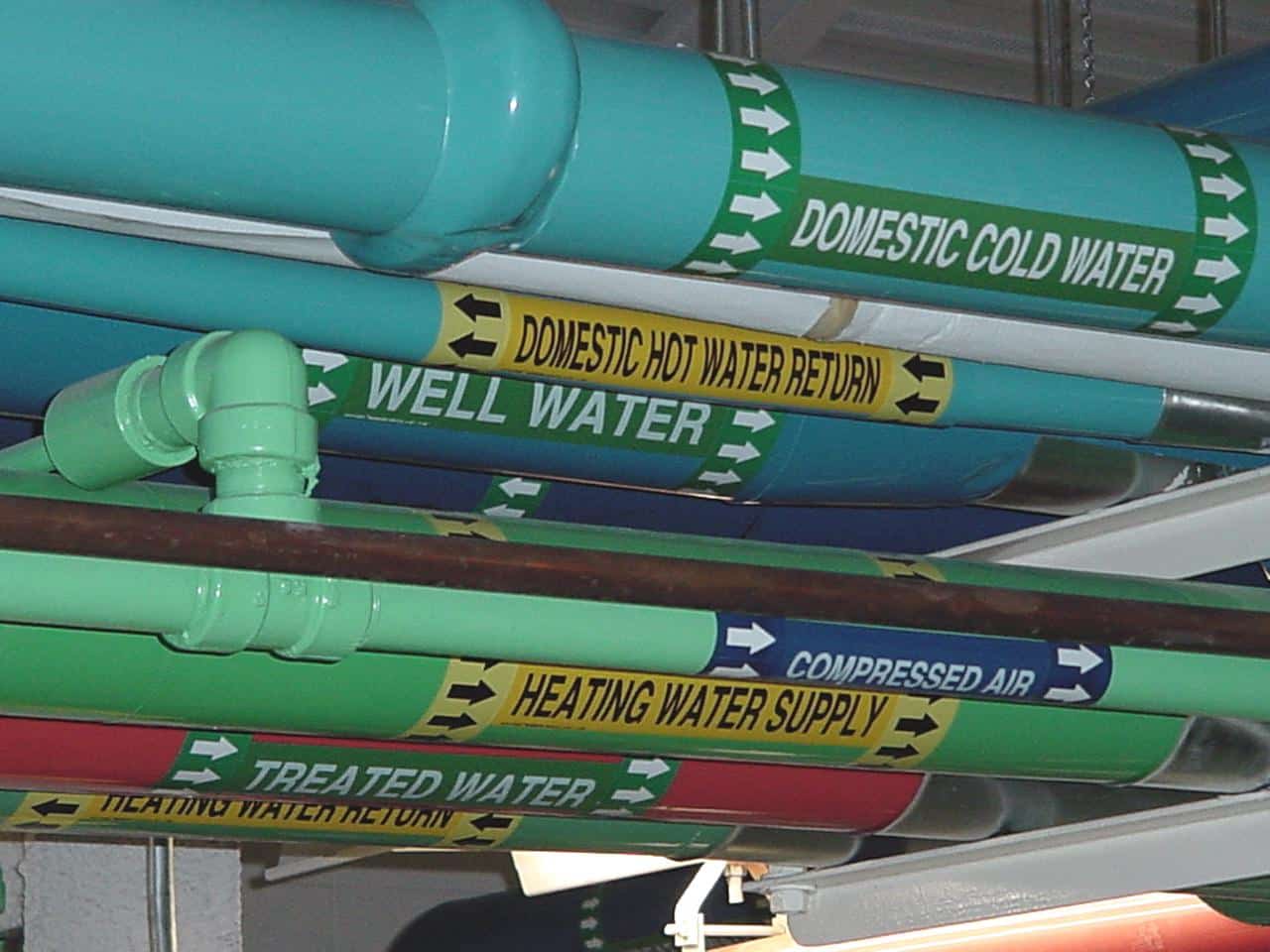
Mechanical insulation can play a significant role in reducing facility energy loss and saving money in the process. Insulation also provides: excellent return on investment, workplace safety, environmental protection, condensation control, and noise control. Five self-paced e-learning modules are available, as well as a mechanical insulation glossary and design guide. The series is totally free – simply sign up with an email account and password.
Lifting and Carrying
Each day in the United States nearly 1,000 people are injured while lifting or carrying material. Most of these injuries are caused by improper lifting and carrying techniques. These injuries are often debilitating and painful and may require physical therapy and surgery, and lead to lifelong pain. The following procedures should be used to reduce the risk of these types of injuries.
Before you begin to lift:
- Use mechanical lifting devices when possible. The use of cranes, forklifts, hand carts or dollies will reduce the risk of lower back strains.
- Plan you lift. Determine what will be lifted, the weight of the object you will be lifting and where the object is going.
When lifting:
- Center yourself close to the object.
- Bend your knees, keep you back straight and bend down.
- Make sure you have a good, firm grip on the object before lifting.
- Keep you back straight and the object close to the body and lift by standing up. Use your leg muscles to lift the object. Use the reverse of this procedure when setting down loads.
Other Lifting and Carrying Procedures:
- All loads that weigh over 50 pounds shall not be lifted by a single employee.
- Do not exceed your lifting capabilities.
- Size up the load before you lift.
- Do not twist your body while lifting or carrying.
- Carry loads close to the body.
- Do not lift heavy objects above or away from your body.
- Stop lifting immediately if you feel pain.
- Maintain a clear view of your travel path while carrying objects.
- When carrying materials up or down stairs one hand shall be available to grasp handrails.
- Wear the proper hand protection for the object to be lifted and carried.
- When two or more employees are required to lift an object make sure good communication procedures are in place.
Use these precautions to reduce your risk of suffering an injury while lifting or carrying objects.
Slips, Trips, and Falls
Slip, trips and falls are preventable if employees recognize the elements that create these hazards.
Slips are usually caused by too little friction or traction between your feet and the walking/working surface which causes you to lose your balance. Slips often result from wet or oily surfaces, spills, weather hazards, walking/working surfaces that do not have the same degree of traction, or loose or unanchored materials.
Trips happen when your foot or leg hits an object and your momentum throws you off balance. Trips often result from obstructed view, poor lighting, poor housekeeping, uneven walking surfaces or cords and hoses running through walkways.
Slips and trips often result in falls, but there are also many other ways you can fall. The following is a list of measures that need to be taken to prevent these types of incidents:
- Walkways must be kept clear and free of debris, cords and equipment.
- Do not take inappropriate shortcuts.
- Unnecessary hurrying, horseplay or other distracting activities may lead to slips, trips and falls.
- Pay attention to what you are doing and others around you.
- Set up ladders properly and make sure hand, shoes and rungs aren’t slippery. Do not use stepladders as straight ladders. Maintain three points of contact while climbing ladders.
- Use retractable lanyards when climbing scaffold ladders above 6 feet.
- Always use handrails when walking down stairs.
- Maintain an unobstructed view ahead of you when carrying materials. If need get help when carrying bulky or heavy loads.
- Maintain adequate lighting in work areas and walkways.
- Never jump when climbing down from trucks, scaffold, ladder, lifts or platforms. Use three points of contact and carefully lower yourself down.
- Wear shoes suitable for the conditions you are working in. The soles of your shoes increase the amount of friction between your shoes and walking/working surface.
- Do not step on objects in your walking path. Go around them or move them. You never know when the object will give or what is underneath it that may cause you to lose your balance.
- Never walk backward on roofs or elevated surfaces.
- Report unsafe conditions or acts immediately, including loose handrails, steps, ladders.
- Be extra caution in wet conditions. Watch for ice in your work area. Do not walk on it, use ice melt or work in another area that is ice-free.
- Use extra caution when entering or exiting buildings, surfaces may have different degrees of traction.
- Always inspect steps leading to scissor lift and maintain three points of contact when entering and exiting.
Personal Fall Arrest Systems (Part 2)
Planning your fall protection system and how it will be used before starting your work is extremely important. Consider all factors that will affect
your safety before, during and after a fall.
Anchorage
- Anchorage points shall be capable of supporting at least 5,000 lbs.
- When more than one personal fall arrest system is attached to the same structure, the strength requirements stated above must be multiplied by the number of personal fall arrest systems attached to the structure.
- Anchorages used for attachment of a personal fall arrest system shall be independent of any anchorage being used to support or suspend platforms.
- Guardrails shall not be used as anchorage points. Guardrails are only required to support 200 lbs of force.
Free Fall
- OSHA requires that the maximum arresting force to be place on an employee not exceed 1,800 lbs. To achieve this personal fall arrest systems must be rigged so the potential free fall is never greater than 6 ft.
- Avoid working above the anchorage point to avoid increased free fall distance and avoid slack line.
- Avoid working where your line may cross or tangle with that of other workers or objects.
- Do not allow lifeline to pass under arms or between legs.
- Never clamp, knot, or prevent the lifeline from retracting or being taut.
- Do not lengthen Self Retracting Lifeline by connecting a lanyard or other component without consulting the manufacture.
Swing Falls
Swing falls occur when the anchorage point is not directly above the point where a fall occurs. The force of striking an object in a swing fall may cause serious injury. In a swing fall, the total vertical fall distance will be greater than if the user had fallen directly below the anchorage point, thus increasing the total free fall distance and the area required to safely arrest the user. The self-retracting lifeline will activate regardless of its orientation relative to the user. The recommended work zone represents the typical acceptable work area for most application. Review you specific application to determine what the appropriate work zone should be. Minimize swing falls by working as directly below the anchorage point as possible. Never permit a swing fall if injury could occur. If a swing fall situation exists in you application contact the manufacture before proceeding.
Fall Clearance
Ensure adequate clearance exists in your fall path to prevent striking an object. A minimum of 6 feet from the working level to the lower level or nearest obstruction is recommended.
Sharp Edges
Avoid working where the lifeline will be in contact with or abrade against unprotected sharp edges. Provide protection for the lifeline when possible.
Rescue
A rescue plan and ability to implement a rescue shall be in place before an employee uses a personal fall arrest system.
Connections
Double locking snap hooks and carabineers should never be connected:
- To a D-ring to which another connector is attached.
- In a manner that would result in a load on the gate.
- In a false engagement, where features that protrude form the snap hook or carabineer catch on the anchor and without visual confirmation seems to be fully engaged to the anchor point.
- To each other.
- Directly to webbing or rope lanyard or tie back, unless the manufacture states it can be used for this application.
- To any object which is shaped or dimensioned such that the snap hook or carabineer will not close and lock, or that roll out could occur.
CURT Winter Safety Workshop
As a winner of the Construction Industry Safety Excellence award from CURT, Jim Gribbins, president of Gribbins Insulation, will present the Gribbins safety program and best practices during the 2012 CURT Winter Best Practices Workshop in New Orleans on Wednesday, February 8, 2012. His speech will focus on the
merits of the Gribbins safety program and how a subcontractor like Gribbins works cooperatively with the general contractor and owner-client to meet safety goals on all different types of projects.

The full agenda may be downloaded here.
The Construction Users Roundtable is an association of leading corporations dedicated to the promotion of cost effective construction methods. The members, as major consumers of construction services seek to foster improved construction safety performance through recognition of the achievement of excellence and the promotion of proven effective work practices. www.curt.org
Eye and Face Protection
According to the National Institute for Occupation Safety and Health (NIOSH) approximately 2,000 eye injuries occur every day at work in the United States. The construction industry has one of the highest rates. OSHA requires eye and face protective equipment where there is a reasonable probability of preventing injury when such equipment is used. Employers must provide a type of protector suitable for work to be performed, and employees must use the protectors.
Employees must make the necessary effort to keep their protective eyewear in good condition. This includes cleaning and protecting your eyewear when not in use. If your protective eyewear is inadequate to wear, turn it into your foreman for a new pair.
Employees will wear ANSI Z87.1 eye protection, at a minimum, at all times. Employees that require corrective spectacles will be required to wear approved side shields or goggles.
Goggle Gear is a type of eye protection that provides protection against dust and particles. The goggles are about the size and weight as normal safety glasses. The goggles fit tight to the face and have a foam gasket that presses against the employee’s face for seal. This type of eye protection provides greater protection against dust and particles if worn correctly.
Goggle Gear will be required whenever tearing off material, working in dust environments, working below other employees, or working with the following types of insulation and/or any insulation that has the potential to enter the eye:
- Cellular glass (foamglas)
- Calcium silicate
- Polyisocyanurate (urethane)
- Perlite
A face shield and safety glasses are required when cutting or grinding with a Metabo or when shooting pins.
A welding hood with the proper filter lens is required when welding.
Report to your supervisor or the safety department immediately if you think something has entered your eye. Usually the quicker the debris is removed from the eye, the better the outcome for the employee. In the instance that debris does get into your eye the first thing to remember is not to rub your eye. Rubbing your eye may cause further injury to your eye. Try to let tears wash the debris out. If tears do not get the debris out, try using eyewash. If the debris is still in your eye, lift the upper eyelid outward and down over the lower lid. If these techniques do not work keep your eye closed and report to your supervisor for further instruction.
